Sun Care
A Practical Guide to UV Protection
UV rays are present not just on clear days but on cloudy ones too. Everyday exposure — a short commute, a lunchtime walk — adds up on your skin and eyes over time. Here's a rundown of the basics, how to combine clothing with sunscreen, and the spots people tend to forget. UV intensity varies a lot by season and time of day, and in places with strong reflection — around midday in summer, at high altitude, near snow, or by the water — even a short time outside can mean significant exposure. This guide covers everyday UV habits; if you have a severe burn or a skin condition, it's safer to see a dermatologist rather than trying to manage it yourself.
Updated: August 4, 2026
Reference data · WeatherAPI / editorial lifestyle guide
Why the UV index matters
The UV index is a scale describing how strongly ultraviolet rays affect the body. Once it passes "moderate," it's worth starting sun protection even for a short outing, and once it hits "high" or above, a hat, sunglasses, and sunscreen should be standard. UV can be strong even when the temperature is low, and reflective surroundings — ski slopes in winter, or anywhere near water — can mean more exposure than it feels like. The index varies a lot by season: in midsummer it reads "high" or above on most days, and even in spring or fall a clear day can push the index higher than you'd expect. It also shifts through the day, so don't rely on the number you checked first thing in the morning — it's worth checking again right before you head out.
- Check the UV index alongside the day's high temperature before heading out
- Cut back on midday outdoor plans once the index reaches "high" or above
- Plan routes that let you move through shade or indoor spaces when possible
- Step up protection near water, snow, or reflective downtown surfaces
- Recheck the index on any clear day, regardless of season
- Trust the index right before you leave rather than the one you checked that morning
When to be extra careful
Once the UV index is high or above, even a brief outing calls for protecting your skin and eyes. It peaks between roughly 10am and 3pm, and reflected light off the ground or nearby buildings can still reach you in the shade. Don't let an overcast sky fool you into skipping protection — clouds cut UV somewhat but never block it entirely. This catches people off guard especially on a rare sunny break during monsoon season, or on a clear fall day once fine dust has cleared — the UV can be strong even though the air temperature doesn't feel extreme. If you have a long outdoor plan like hiking, fishing, or a day at the water, splitting your time to minimize exposure around midday is an effective strategy.
- Be especially careful with outdoor activity between 10am and 3pm
- Remember that reflected light can still reach you even in the shade
- Be extra thorough near snow, beaches, or ski slopes where reflection is strong
- Don't skip sunscreen just because the sky looks cloudy
- Stay alert on sunny breaks during the rainy season or clear days after dust clears
- For hiking, fishing, or water activities, schedule around minimizing midday exposure
Practical tips for applying sunscreen
Sunscreen alone often isn't enough — pairing it with a hat, sunglasses, and covering clothing works better. It loses effectiveness once you sweat or get wet, so reapply on a schedule. Using too little product means you won't get anywhere near the labeled protection, so apply generously on exposed areas like your face, neck, and arms. It's worth checking the PA rating alongside SPF, since that combination accounts for both UVA and UVB protection. Water-resistant formulas are the better choice for swimming or heavy sweating, but even those lose effectiveness over time, so sticking to a reapplication schedule still matters. The scalp is an easy spot to forget — a hat or a UV-protective spray made for hair is worth considering.
- Apply SPF 30 or higher generously, 15–30 minutes before heading out
- Reapply every 2–3 hours, and sooner if you sweat or get wet
- Use a hat, sunglasses, and clothing that covers your arms and neck
- Don't forget easy-to-miss spots: behind the ears, the nape of the neck, the tops of your feet
- Use lip balm and hand products with UV protection too
- Check the PA rating along with SPF to cover both UVA and UVB
- Protect your scalp separately with a hat or a UV-protective hair spray
Pairing it with the right clothing
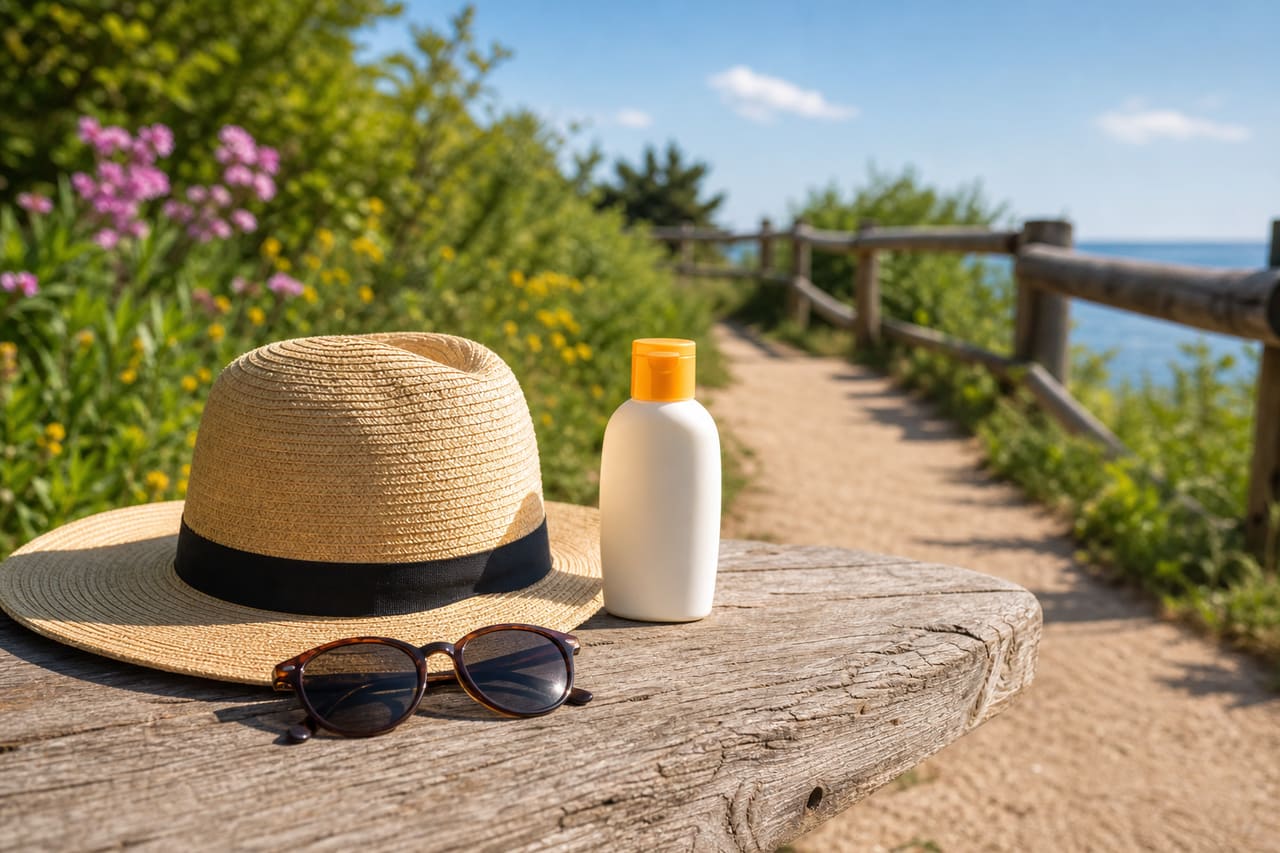
Even on a hot day, light but covering clothing helps block UV. Tightly woven, darker-colored fabric generally blocks more, so if short sleeves alone aren't enough, add arm sleeves or a thin shirt. When out with kids, plan for shorter stretches between shade and rest breaks than you would for yourself. More summer clothing now comes with a UPF rating, and a higher number means better protection, which is worth checking if you're outdoors often. A wide-brimmed hat covers more of your face and neck than a small cap, and sunglasses only really help if they have a proper UV coating.
- Choose darker colors and tightly woven fabric over light colors
- Add arm sleeves or a thin shirt if short sleeves alone aren't sufficient
- Bring a hat and stroller cover along when out with kids
- Build rest, hydration, and reapplication time into your schedule before long outdoor stretches
- Look for a UPF rating on summer clothing if you're outdoors frequently
- Pair a wide-brimmed hat with UV-coated sunglasses for broader coverage
If you notice sunburn or irritation
If your skin feels stinging or looks red, the priority is stopping further exposure and letting your skin cool down somewhere shaded. If it comes with blistering, a headache, or fever, that's a sign to see a doctor rather than trying to manage it with home care alone. Keeping up steady protection habits day to day is far less of a hassle than dealing with the aftermath of a serious burn. Right after a burn, cooling the skin with cool water and moisturizing generously helps, while a hot shower or products with alcohol can add to the irritation, so it's better to avoid them. Overexposed eyes can become red or feel gritty, and if that lasts more than a day, it's worth getting checked by an eye doctor.
- Avoid any additional sun exposure on reddened skin
- Don't use harsh scrubs or exfoliants on irritated skin
- Rest indoors if glare or pain is significant, and see a doctor if needed
- Avoid peak UV hours even if you have plans the next day
- Skip hot showers and alcohol-based products right after a burn
- See an eye doctor if redness or a gritty feeling lasts more than a day
Seasonal UV patterns
In summer, the sun sits high enough that UV stays strong through most of the day, and on a clear break during the rainy season, humidity and UV can add up to double the strain. Spring and fall have milder temperatures that make it easy to let your guard down, but the UV index on a clear day can climb nearly as high as summer, so it's worth checking before a hike or an outing. Winter cuts down the overall amount of UV, but at a ski resort or up in the mountains, sunlight reflecting off snow adds to direct exposure and can be tough on both skin and eyes. Building a habit of checking the UV index regardless of season helps you stay covered even during the times of year it's easiest to forget.
- Prepare for both heat and UV together on clear breaks during the summer rainy season
- Check the UV index before an outing even on a mild, clear spring or fall day
- Account for snow-reflected UV in addition to direct sun at ski resorts or in the mountains
About this guide
This guide summarizes common weather and lifestyle practices for everyday reference. It does not replace official medical or emergency guidance — follow meteorological agencies and local authorities when a warning is in effect.